
Materials
The right material for the right application.
We print with industrially proven filaments and advise on the right material for your part. Below is an overview with a simple 1–5 grading.
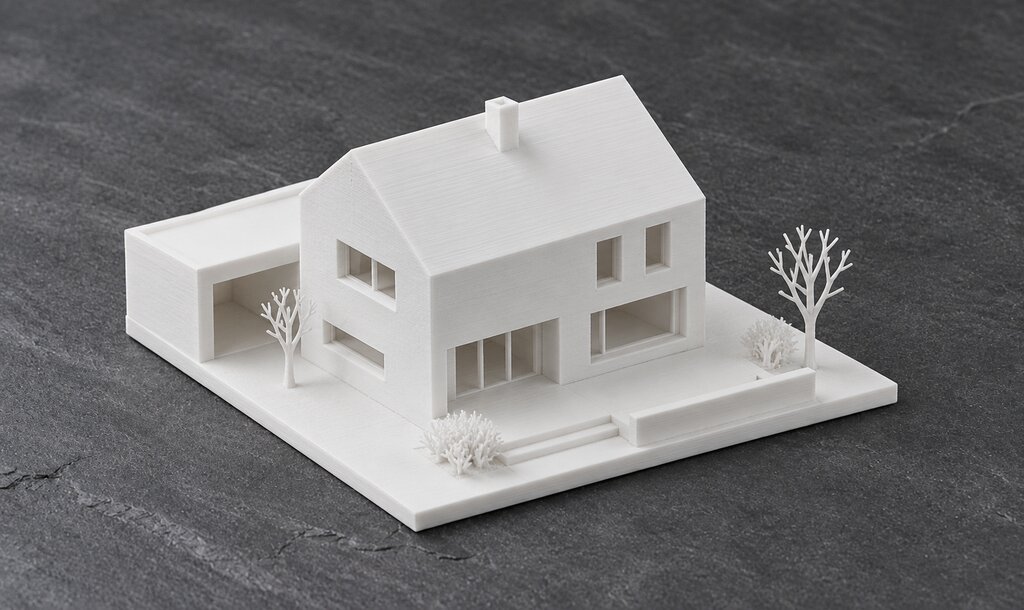
PLA
Stiff and dimensionally stable. Best surface finish at the lowest cost, but no heat resistance.
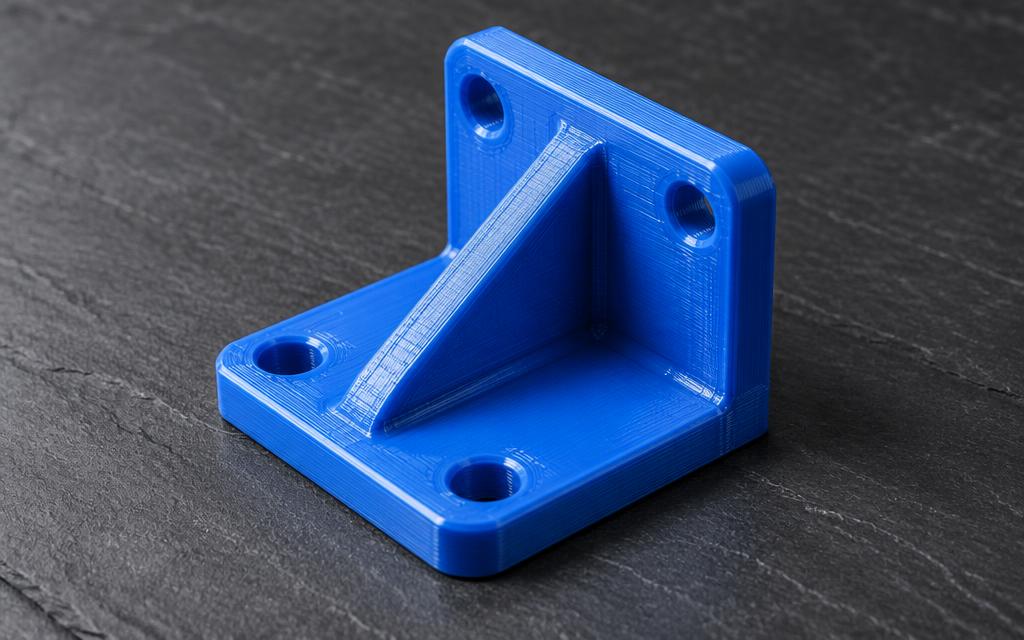
PETG
Our workhorse. Tough, chemical- and moisture-resistant — a solid all-round functional part.
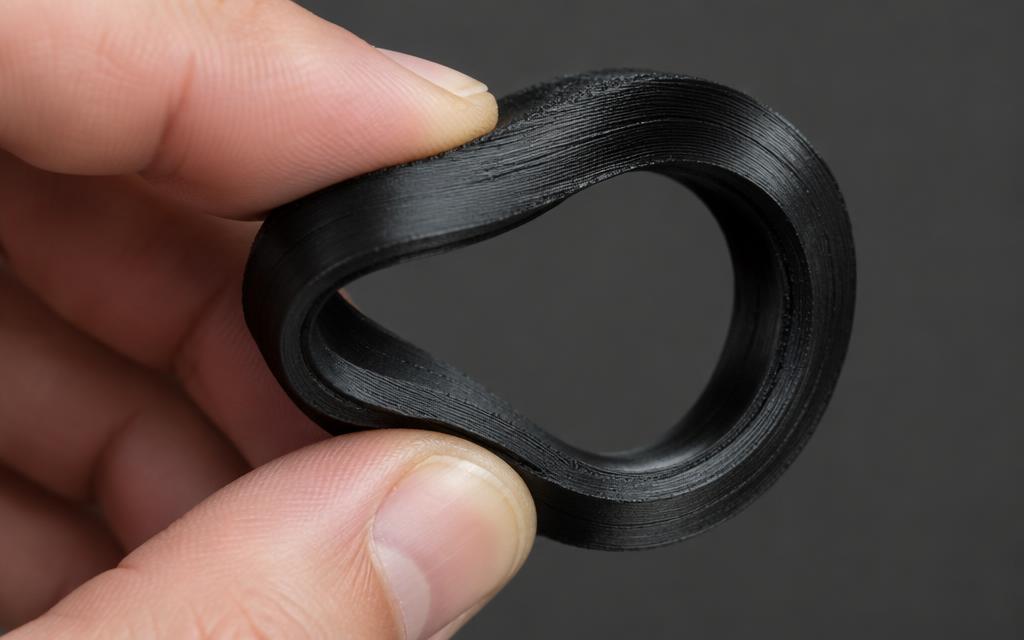
TPU 95A (flexible)
Rubber-like and abrasion-resistant. Flexes and rebounds without cracking.
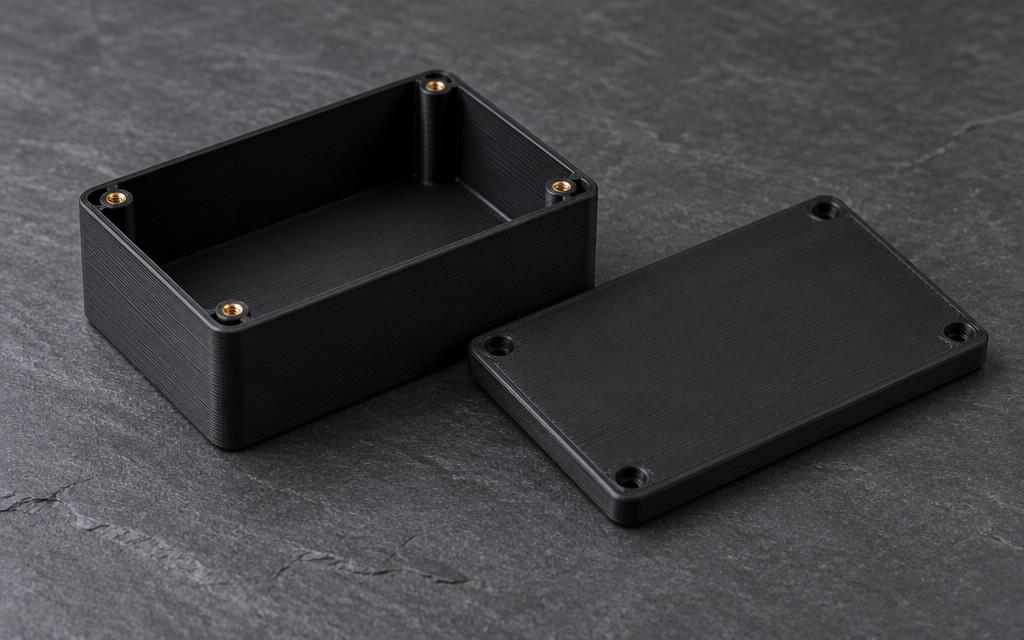
ABS
Heat-resistant industry classic. Can be glued, sanded and vapour-smoothed with acetone.
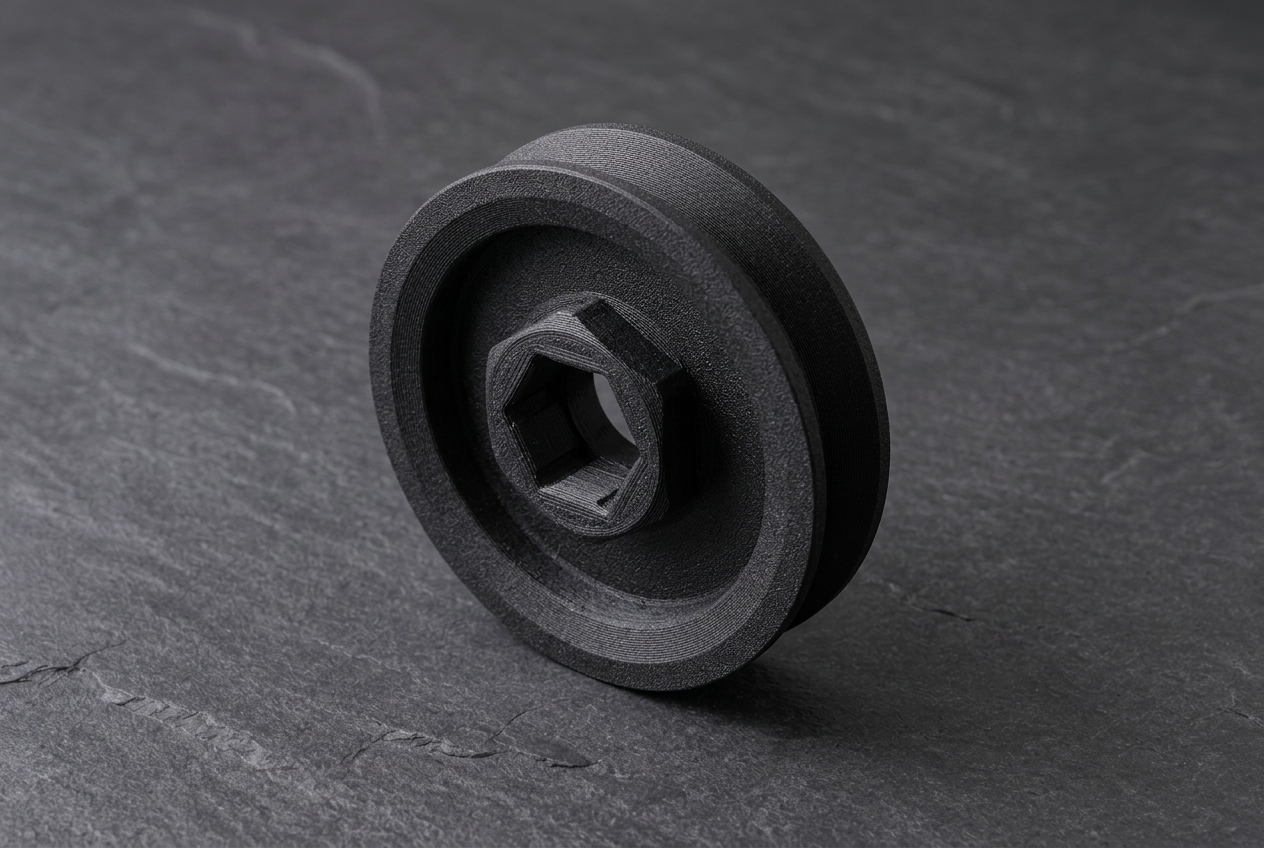
PAHT-CF (nylon, carbon fibre)
High-temperature carbon-fibre nylon. Strong and wear-resistant for parts in service.
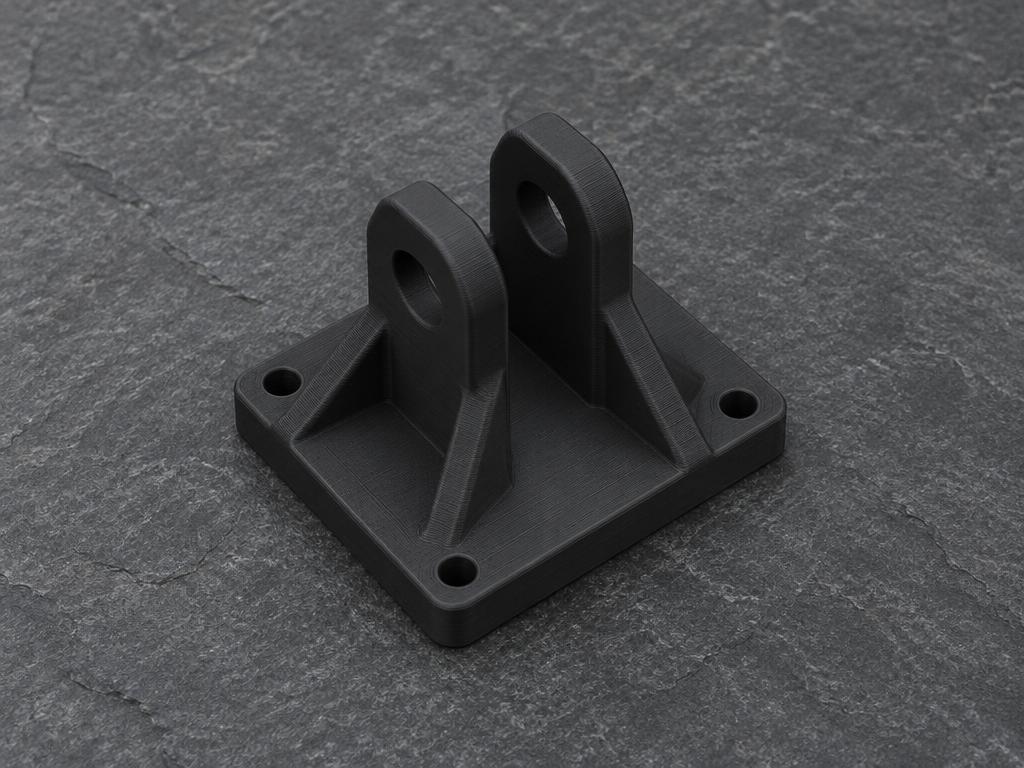
PETG-CF (carbon fibre)
Carbon-fibre reinforced PETG — stiffer, less warping and a matte industrial finish.
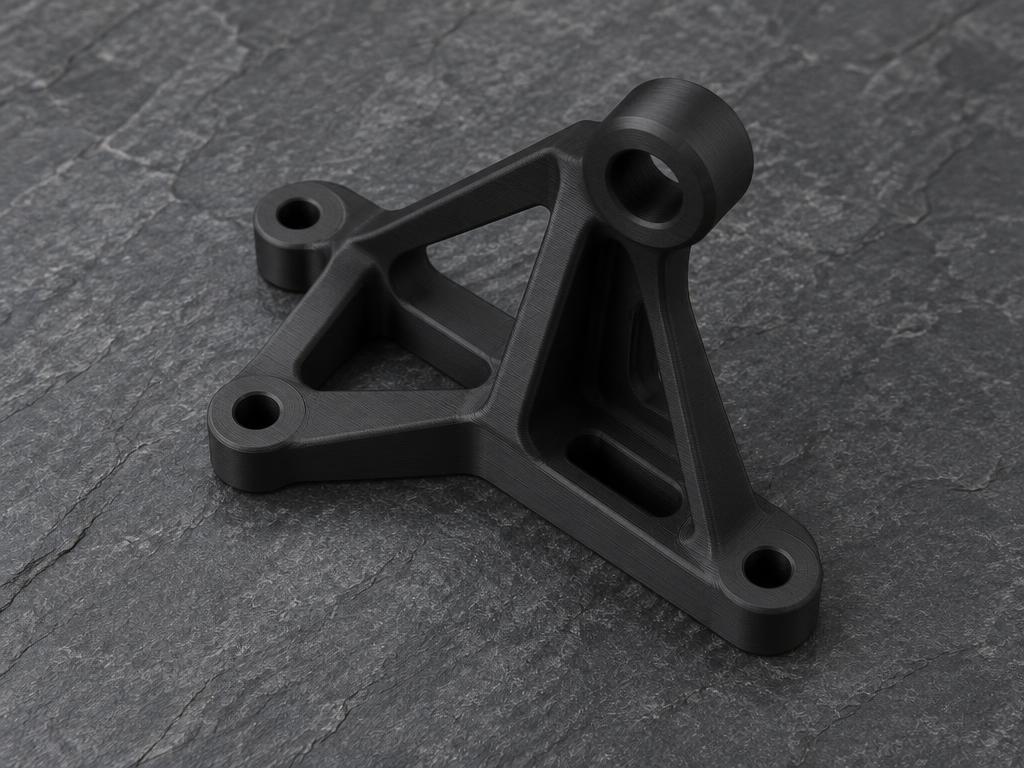
PPA-CF (carbon fibre)
High-performance carbon-fibre polyphthalamide. Extremely stiff, heat-resistant and less moisture-sensitive than nylon.
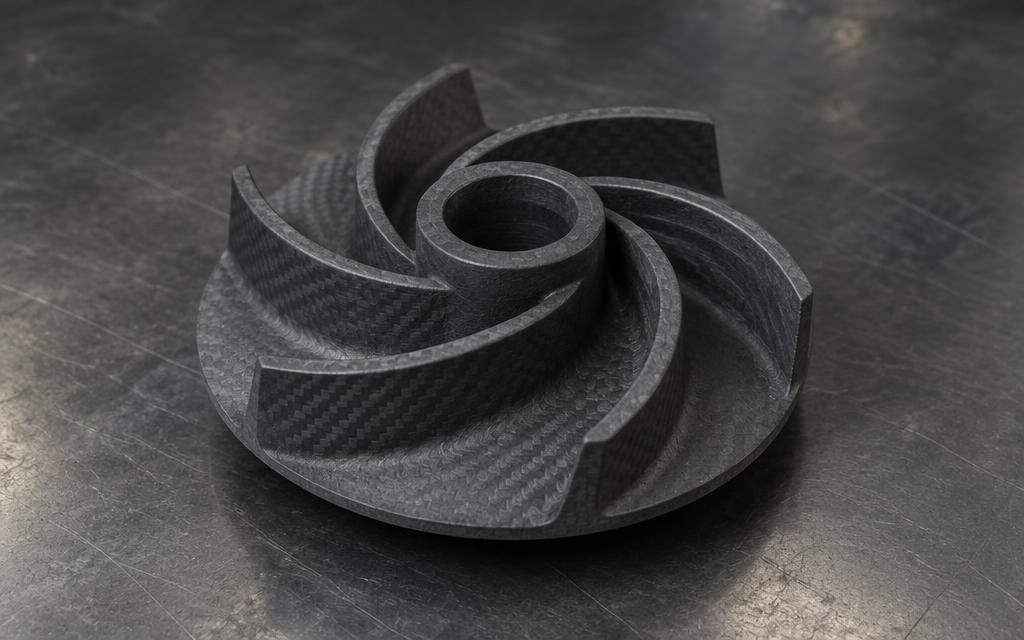
PPS-CF (carbon fibre)
Chemical- and heat-resistant (200 °C+) with inherent flame retardancy. For demanding industrial environments.
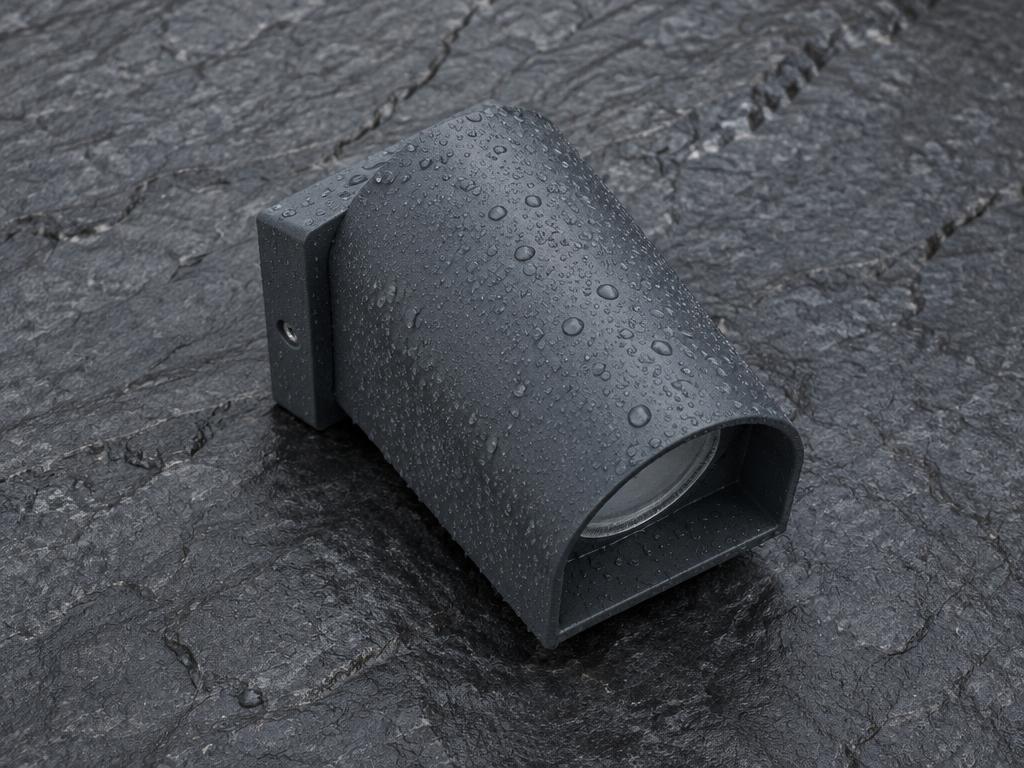
ASA
ABS with UV and weather resistance. First choice for parts that live outdoors.
Finish: 5 is best. Cost: 1 is lowest.
Strength = flexural strength and Stiffness = flexural modulus (ISO 178), Toughness = Charpy impact strength (ISO 179), Heat resistance = HDT at 0.45 MPa (ISO 75). Typical XY values from the filament manufacturer's technical data sheets, measured on printed test specimens. Real-world values depend on geometry, orientation and print settings.
The FDM process
FDM builds the model layer by layer as melted plastic filament is extruded through a nozzle. We choose layer height, infill and material based on the part's requirements for strength, surface quality and cost.